Su-35S
Su-35S Flanker-E
The final form of the Flanker line — fourth-generation aerodynamics and agility taken to their limit, at the cost of abandoning stealth entirely.
- Origin
- Russia
- Status
- In Service
- First flight
- 2008-02-19
- Introduced
- 2014-02
- Manufacturer
- Sukhoi
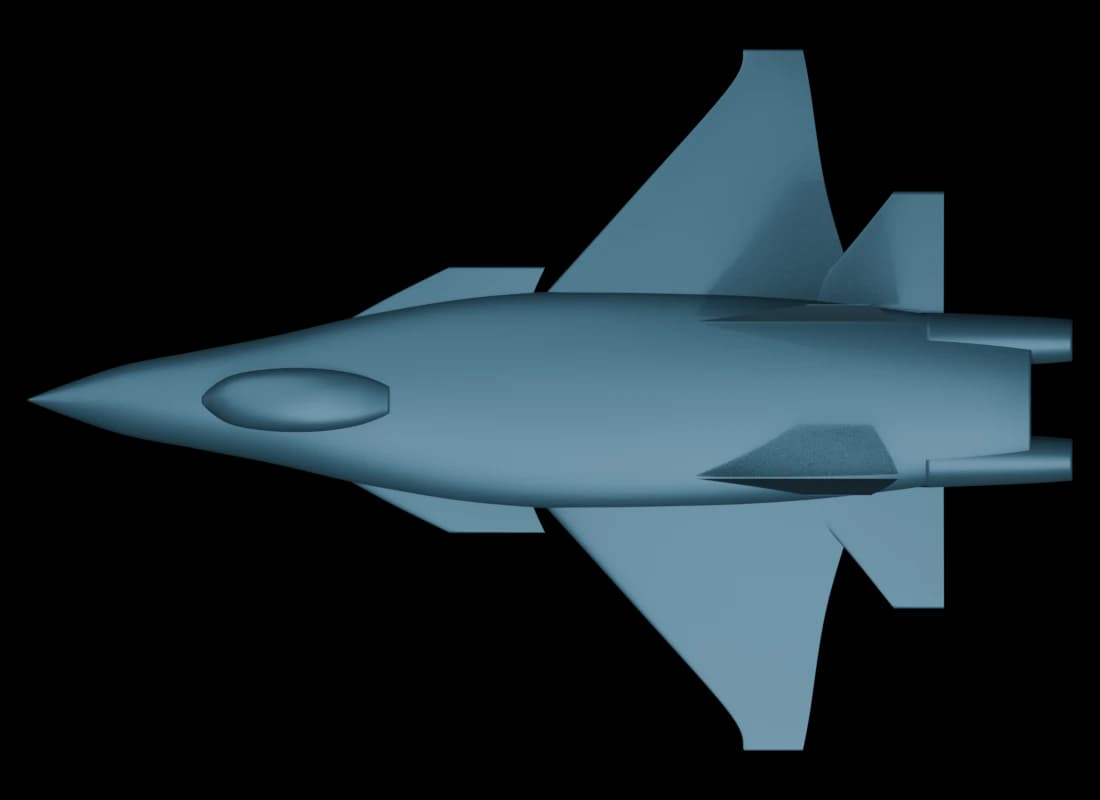
Overview
The Su-35S is the endpoint of four decades of Flanker evolution. It keeps the original integrated aerodynamic layout and adds more powerful three-axis vectoring engines, an entirely new radar and avionics suite, a strengthened structure, and greater internal fuel.
Its position is unusual: with the Su-57 slow to reach any scale, the Su-35S has in practice carried Russia's high-end air superiority role. That was not the design intent but the result of production and budget constraints — understanding this aircraft requires also understanding the fifth-generation type beside it, built in a fraction of the numbers.
Technologically it belongs with the F-15EX: a mature fourth-generation platform pushed to its limit, using absolute performance and affordable numbers to offset a generational gap. How far that approach goes depends on how many stealth aircraft the opponent fields.
Design
The most visible external difference from the Su-27 is the three-axis vectoring nozzles, deflecting ±15° in both pitch and yaw and directly responsible for its supermanoeuvrability. The canards and dorsal airbrake trialled on the Su-27M were both deleted: the canards' trim benefit did not justify their weight and drag, and differential rudders replaced the airbrake.
The N035 Irbis-E has a large aperture and detection range near the top of its generation. But it is a passive array — a generational gap from the contemporary Western active arrays in both jamming resistance and multi-target handling. This is one core reason the Su-35S looks formidable on a specification sheet while combat assessments remain divided.
The airframe was comprehensively strengthened, raising service life from the Su-27's 2,000 flight hours to 6,000. That improvement appears in no performance figure yet directly determines lifecycle cost.
Timeline
First flight
Delivered to operational units
Deployed to Syria
First combat deployment, flying escort and patrol missions.
Export to China
First deliveries — China's first Russian fighter purchase since the Su-30, and the Su-35's first export customer.
Variants
- Su-35SIn Service
The in-service standard.
- Su-35SKIn Service
For export, with avionics and weapons fit adjusted per customer.