AIM-120D
AIM-120 AMRAAM
The Western standard medium-range air-to-air missile. It made "fire and forget" real — and what that changed was how air combat is organised, not the outcome of any single engagement.
- Origin
- United States
- Status
- In Service
- Introduced
- 1991
- Manufacturer
- Raytheon
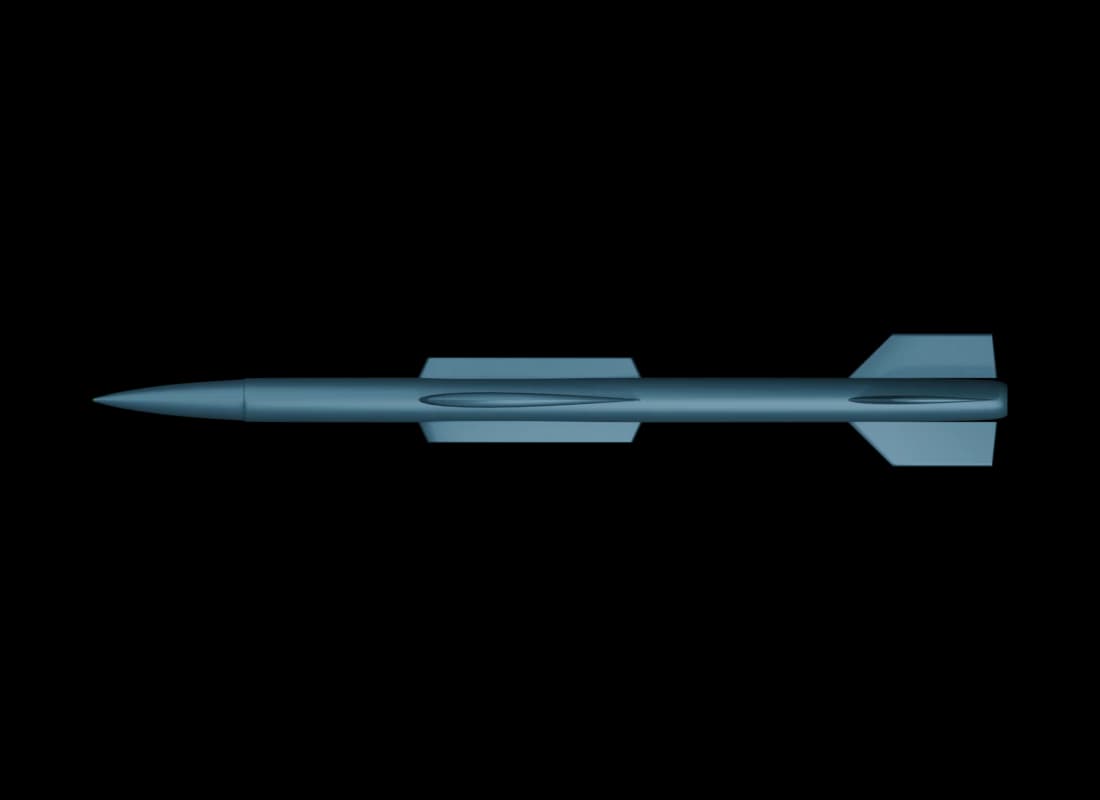
Overview
The AIM-120 entered service in 1991, replacing the AIM-7 Sparrow. The fundamental difference is not range or speed but guidance: the Sparrow used semi-active radar homing, requiring the launching aircraft to keep illuminating the target with its radar until impact — during which it could not manoeuvre freely, disengage, or attack a second target.
The AIM-120 puts an active radar seeker in the missile. Inertial guidance with datalink updates covers the midcourse, and the seeker goes active for terminal homing — so the launching aircraft can leave before impact. What that changed is not the missile's kill probability but the organisation of the entire engagement: one aircraft can engage multiple targets, and can turn away from the opponent's missile envelope while its own is still flying.
It is still being improved (the AIM-120D adds range and a better seeker) while already being treated as a generation due for replacement — the existence of the AIM-260 programme is a direct reflection of pressure from opponents' growing missile ranges.
Design
The airframe is a pure body of revolution with four very small mid-body strakes; steering comes entirely from four all-moving tail control surfaces. That inverts the approach of earlier medium-range missiles with large wings: small surfaces cut drag at the cost of low-speed manoeuvrability, a worthwhile trade for a missile that flies fast throughout.
Range is the most commonly misread figure for this class of weapon. "Maximum range" usually means a head-on, high-altitude launch against a non-manoeuvring target, whereas the no-escape zone — the distance within which a target cannot evade regardless of manoeuvre — is typically a third to a half of the quoted figure. The range entry below notes this.
Timeline
Enters service
First combat kill
A U.S. F-16 downed a MiG-25 over the southern Iraq no-fly zone.
AIM-120D operational
Extended range, improved seeker, and a two-way datalink.
Variants
- AIM-120A/BRetired
The first production versions, with limited range and countermeasure resistance.
- AIM-120CIn Service
Reduced fin span to fit the F-22's internal bay — a case of the bay dimensions constraining the weapon's shape.
- AIM-120DIn Service
The current standard, with extended range, a two-way datalink, and improved countermeasure resistance.