DDG-1000
Zumwalt-class destroyer
Thirty-two were planned; three were built. It is the clearest available lesson in the conflict between technical ambition and affordability.
- Origin
- United States
- Status
- Limited Service
- Introduced
- 2016
- Manufacturer
- General Dynamics Bath Iron Works
Overview
The Zumwalt class was the next-generation destroyer conceived in the late 1990s: a tumblehome stealth hull, integrated electric propulsion, a composite deckhouse, and a 155 mm advanced gun. On nearly every technical axis it was a generation ahead of the Burke.
Then it failed. Unit cost rose from a planned $3.4 billion to over $8 billion, and procurement fell from thirty-two ships to three. Falling numbers then pushed unit cost higher still, since development had to be amortised across fewer hulls — a feedback loop common to every collapsed defence programme. The B-2 is the same story a decade earlier.
The sharpest irony is the gun. The LRLAP guided projectile developed specifically for the 155 mm Advanced Gun System saw its buy fall from thousands of rounds to hundreds, driving unit price towards a million dollars each, and was cancelled. Both guns were left with no ammunition — a ship built for naval gunfire support lost its central weapon.
The Navy's response was to go back to ordering Burkes. That decision is the strongest possible endorsement of "good enough and affordable".
Design
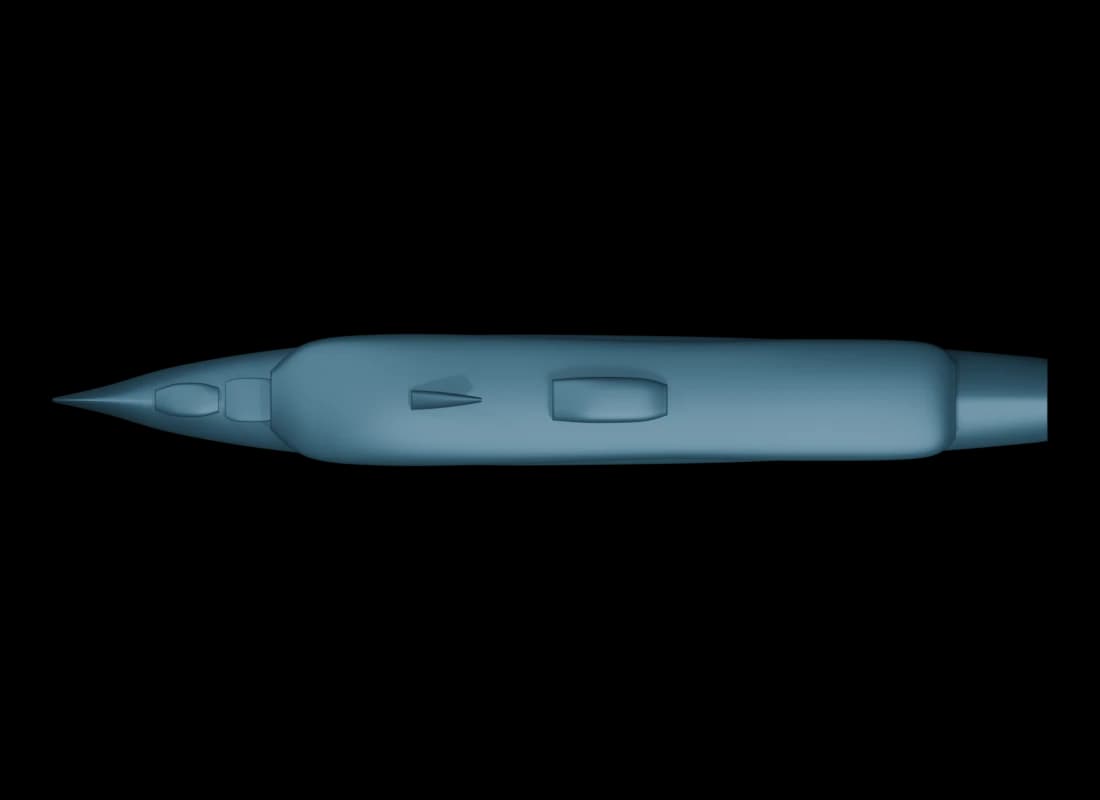
The tumblehome hull is its most visible feature: widest at the waterline and narrowing upward, the reverse of every conventional flared hull. The shape deflects radar returns upward with striking effect — the published comparison is to a fishing boat.
The cost was contested from the design stage: a tumblehome hull loses reserve buoyancy as it heels, giving less stability in heavy seas than a flared hull. Critics argued a capsize risk in severe conditions; defenders held the design accounted for it. With only three ships and limited sea time, the argument has never been settled empirically.
Integrated electric propulsion was the other radical choice: turbines generate electricity rather than driving shafts, letting power shift flexibly between propulsion and weapons such as railguns or lasers. The cost is system complexity and reliability risk — and none of the high-energy weapons envisaged has yet matured enough to install.
Timeline
DD(X) programme launched
Thirty-two ships planned, to replace older destroyers and provide naval gunfire support.
Procurement cut to three
Runaway unit cost led the Navy back to buying Burkes.
Lead ship commissioned
LRLAP projectile cancelled
The shrinking buy drove unit price towards a million dollars per round. Both guns have had no ammunition since.
Variants
- DDG-1000Limited Service
Zumwalt, Michael Monsoor, and Lyndon B. Johnson, being refitted with hypersonic weapons in place of the guns.