F-15E
F-15E Strike Eagle
A heavy strike fighter derived from a pure air superiority design. It proved something counterintuitive — an airframe optimised to the limit for air combat also suits long-range heavy strike.
- Origin
- United States
- Status
- In Service
- First flight
- 1986-12-11
- Introduced
- 1989-04
- Manufacturer
- Boeing · McDonnell Douglas (original developer)
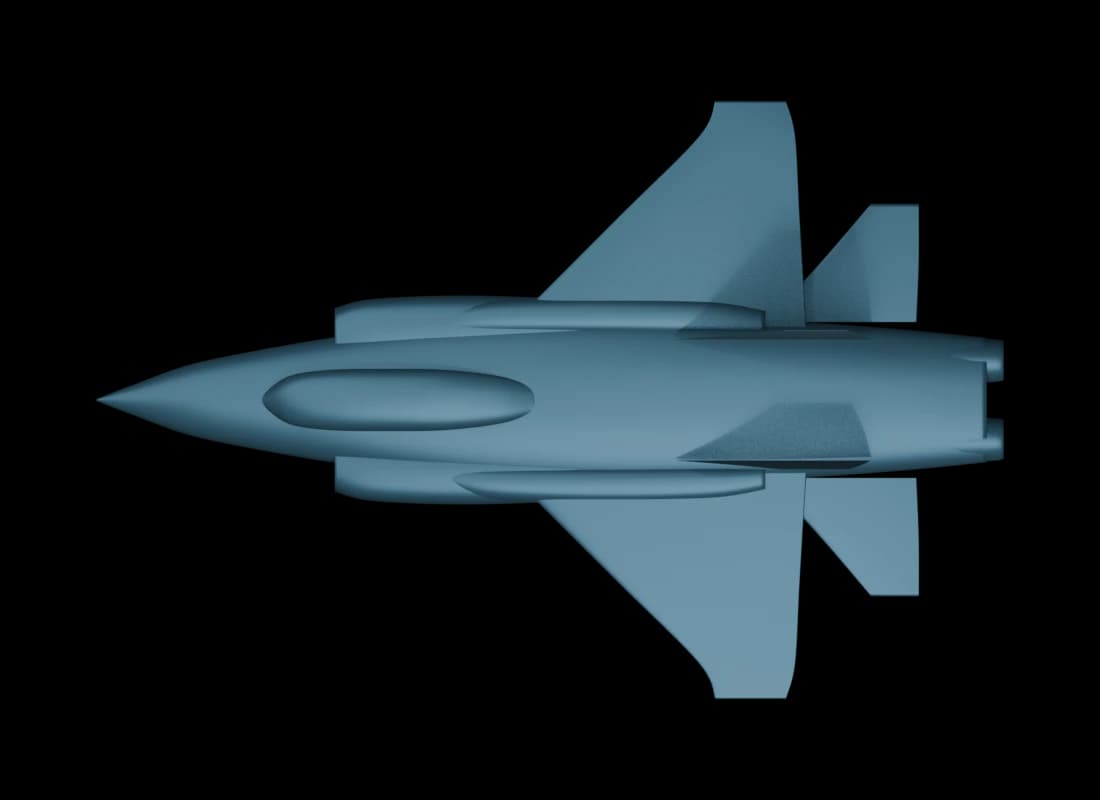
Overview
The F-15 was sold on the slogan "not a pound for air-to-ground". The E model overturned it: tandem seating, conformal fuel tanks, a strengthened airframe, and a complete air-to-surface weapons system turned an air superiority fighter into the most important strike aircraft the U.S. Air Force still operates.
The conversion worked because the original design had enough margin — a 56.5 m² wing, two high-thrust engines, and a robust structure, all intended for air combat manoeuvring, turned out to suit carrying a heavy load a long way. An aircraft designed for extreme performance in one direction often has margin in others, which is the engineering lesson worth taking from the F-15E.
It is still in production: the F-15EX adds an AESA radar and new avionics, with deliveries to the Air Force from 2021. In the fifth-generation era its role is the missile truck that follows the stealth aircraft through the gap they open — a division of labour that itself explains why heavy fourth-generation fighters have not left the field.
Design
The conformal fuel tanks are the E model's most important external change. Hugging the fuselage sides, they carry far less drag than drop tanks of the same capacity, pushing combat radius to 1,270 km with almost no manoeuvring penalty. It is a textbook case of trading shape for efficiency — and in the stealth era the same volume can only go inside a bay, because any external store destroys low observability.
The rear-seat weapon systems officer is the other fundamental change. The sensor management and weapons delivery workload of 1980s strike missions exceeded what one person could handle; the second seat was necessity, not redundancy. Notably, four decades later China's J-20S returned to two seats for an entirely different reason — controlling uncrewed wingmen.
The structure was comprehensively strengthened to sustain 9 g fully loaded, raising service life from 4,000 to 16,000 flight hours. That change appears in no performance figure yet is the fundamental reason the type is still flying.
Timeline
F-15A first flight
The original pure air superiority aircraft, sold on the slogan "not a pound for air-to-ground".
F-15E first flight
Delivered to operational units
First combat in the Gulf War
Flew Scud-hunting missions above all, validating the second seat and the night navigation pod.
F-15EX delivered
With an AESA radar, new avionics, and a 20,000-hour airframe. Continuing to buy a heavy fourth-generation fighter in the fifth-generation era is itself a notable signal.
Variants
- F-15A/B/C/DRetired
The original air superiority configuration. The F-15C retains a record of no air-combat losses.
- F-15EIn Service
Tandem seats, conformal tanks, strengthened structure — the Air Force's frontline strike platform.
- F-15EXIn Service
AESA radar, new mission computer, 20,000-hour airframe. Deliveries began in 2021.