J-20
J-20 Mighty Dragon
China's first fifth-generation fighter and the only in-service fifth-generation design with canards. Almost none of its specifications have been officially released.
- Origin
- China
- Status
- In Service
- First flight
- 2011-01-11
- Introduced
- 2017-03
- Manufacturer
- Chengdu Aircraft Industry Group
Overview
The J-20 was developed by Chengdu Aircraft Industry Group, first flew in January 2011, and was publicly confirmed in PLA Air Force service in March 2017. It is the third fifth-generation fighter to enter service after the F-22 and F-35, and the only one with a canard configuration.
One caveat belongs up front: almost nothing in this entry is an official figure. Chinese authorities have never released dimensions, weights, or performance data for the J-20. The numbers here come from photogrammetry against public imagery, on-site comparison at air shows, and estimates published by Western research institutions — and these often disagree substantially. Every figure below "official" is labelled as such in the specification table; read the confidence marker before trusting the number.
Design
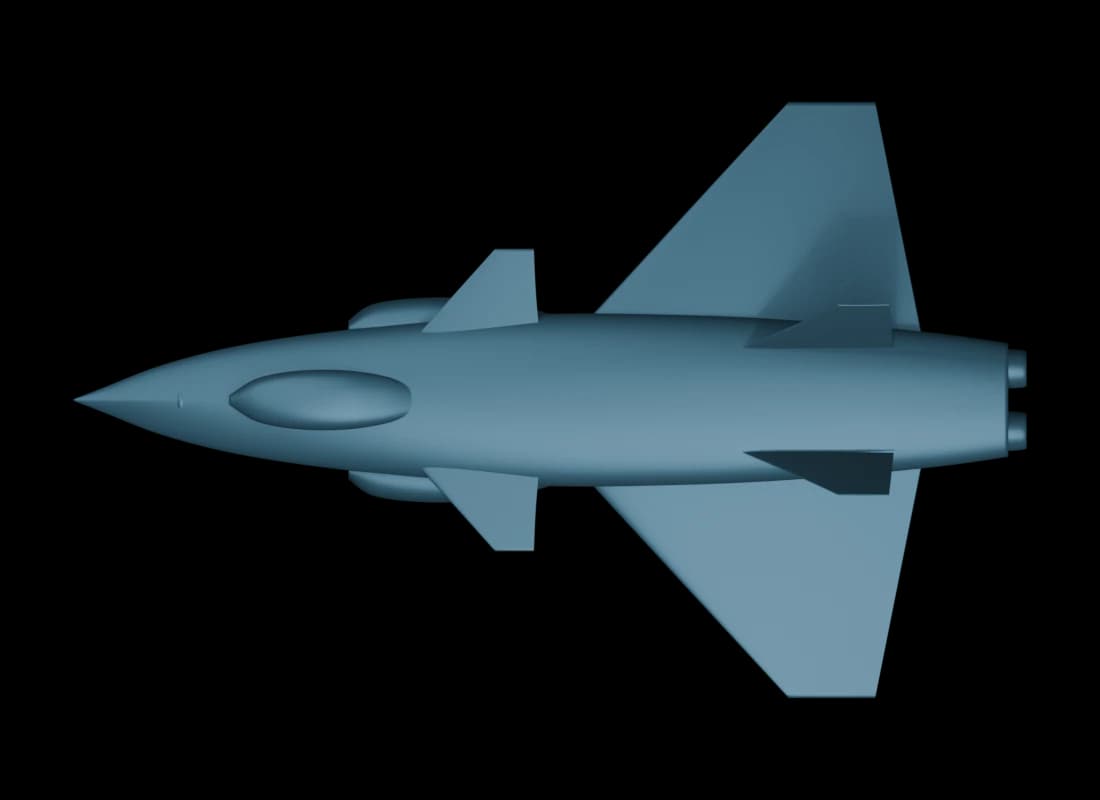
The canard layout is the J-20's most argued-over design decision. All-moving canards ahead of a delta wing provide strong trim lift and instantaneous turn performance, and help achieve a good lift-to-drag ratio with limited thrust. The cost is that the canard itself is a forward-facing radar reflector, making low observability harder to achieve than on a conventional layout. Choosing this route suggests that under the constraints of the time — limited available engine thrust above all — aerodynamic efficiency was ranked ahead of absolute frontal signature.
The inlets use a diverterless supersonic inlet (DSI), as on the F-35. The fins are all-moving and canted, with noticeably less area than the F-22's fixed fin plus rudder. A pair of ventral fins adds directional stability at high angles of attack — one of the easiest visual cues distinguishing it from the F-22 and F-35.
The engine has been this aircraft's long-standing weak point and the focus of most argument about it; see the propulsion entries in the specification table.
Timeline
First flight
Flew at Chengdu during a visit to China by the U.S. Secretary of Defense, drawing wide attention.
First public appearance at Zhuhai
Two aircraft made a brief flying display — the first close public observation.
Service entry confirmed
Assigned to combat units
Two-seat J-20S revealed
A two-seat configuration appeared for the first time, widely associated with manned-unmanned teaming.
Variants
- J-20In Service
The single-seat production aircraft. Successive batches changed engines and avionics without an external designation change.
- J-20SIn Service
The world's first two-seat fifth-generation fighter. The rear-seat role has not been disclosed; it is widely assumed to involve control of uncrewed wingmen.