DDG-51 Flight IIA
Arleigh Burke-class destroyer
A general-purpose destroyer designed at the end of the Cold War and still in production — already the most numerous large surface combatant ever built.
- Origin
- United States
- Status
- In Service
- Introduced
- 1991-07-04
- Manufacturer
- General Dynamics Bath Iron Works · Ingalls Shipbuilding
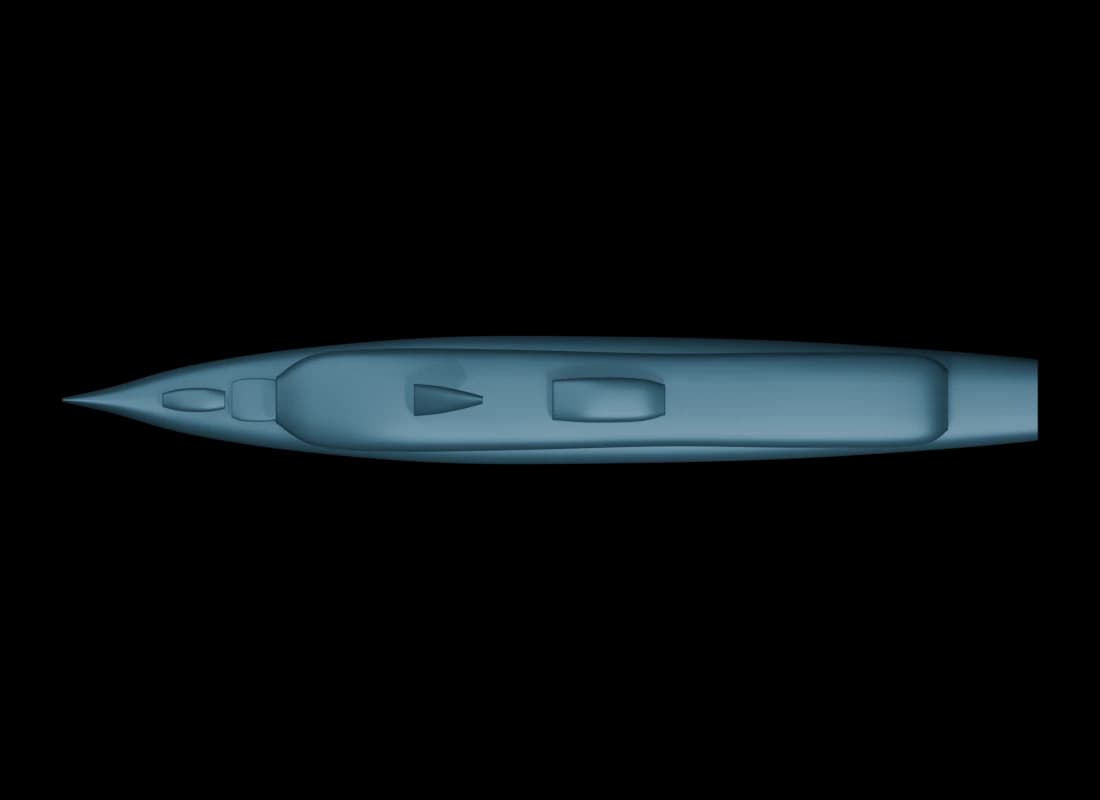
Overview
The lead ship commissioned in 1991 and new hulls are still being launched. More than seventy have been built over three decades, with orders running into the 2030s — no other large surface combatant has matched that scale or that production span.
Its success rests less on any performance figure than on a judgement: fit the Aegis system and its phased-array radar into the smallest hull that can be mass-produced, rather than maximising per-ship capability. The contemporary Ticonderoga-class cruiser was larger and more capable but expensive and few in number; those are now retiring while Burkes are still being built.
The cost is that the hull's margin has been consumed. Three decades of added equipment, sensors, and crew requirements pushed Flight IIA past 9,200 tonnes and Flight III to nearly 9,700 — there is no growth margin left, and that is the direct reason the U.S. Navy started a next-generation destroyer programme.
Design
Aegis is built around four fixed phased-array faces mounted on the superstructure. Unlike a rotating antenna, fixed arrays can sustain multiple beams in any direction at once, tracking hundreds of targets and guiding dozens of missiles simultaneously. That is not "longer detection range" but "more simultaneous capacity" — a different quantity.
The Mk 41 vertical launching system is the other key. Its 96 cells accept air defence, anti-submarine, and land-attack missiles in any mix, configured before sailing. That moves "what this ship can do" from a shipyard decision to a pre-deployment one, which is what makes the general-purpose destroyer concept work.
Inward-sloping sides and a faceted superstructure are radar signature control applied to a warship — the same principle as a stealth aircraft's chined fuselage. But the Burke only reduces its signature rather than eliminating it; it was never a stealth ship.
Timeline
Lead ship commissioned
USS Arleigh Burke (DDG-51) entered service.
Flight IIA construction begins
Adding a twin hangar and with it full organic anti-submarine aviation capability.
Production resumed after the Zumwalt class was truncated
With the next-generation destroyer cut to three hulls, the Navy went back to ordering Burkes — a textbook case of "good enough and affordable" beating "most capable".
First Flight III delivered
With the SPY-6 active array and a new electrical plant, at nearly 9,700 tonnes full load.
Variants
- Flight I/IIReserve
No hangar, only a flight deck. Some have retired.
- Flight IIAIn Service
Adding a twin hangar; the most numerous flight built.
- Flight IIIIn Service
SPY-6 active array with upgraded power and cooling. Hull margin is close to exhausted.