M1A2 SEP v3
M1A2 Abrams
The U.S. Army's main battle tank. Pairing a gas turbine with depleted-uranium armour was a radical choice at the end of the Cold War; thirty years on, both its costs and its benefits are clear.
- Origin
- United States
- Status
- In Service
- Introduced
- 1992
- Manufacturer
- General Dynamics Land Systems
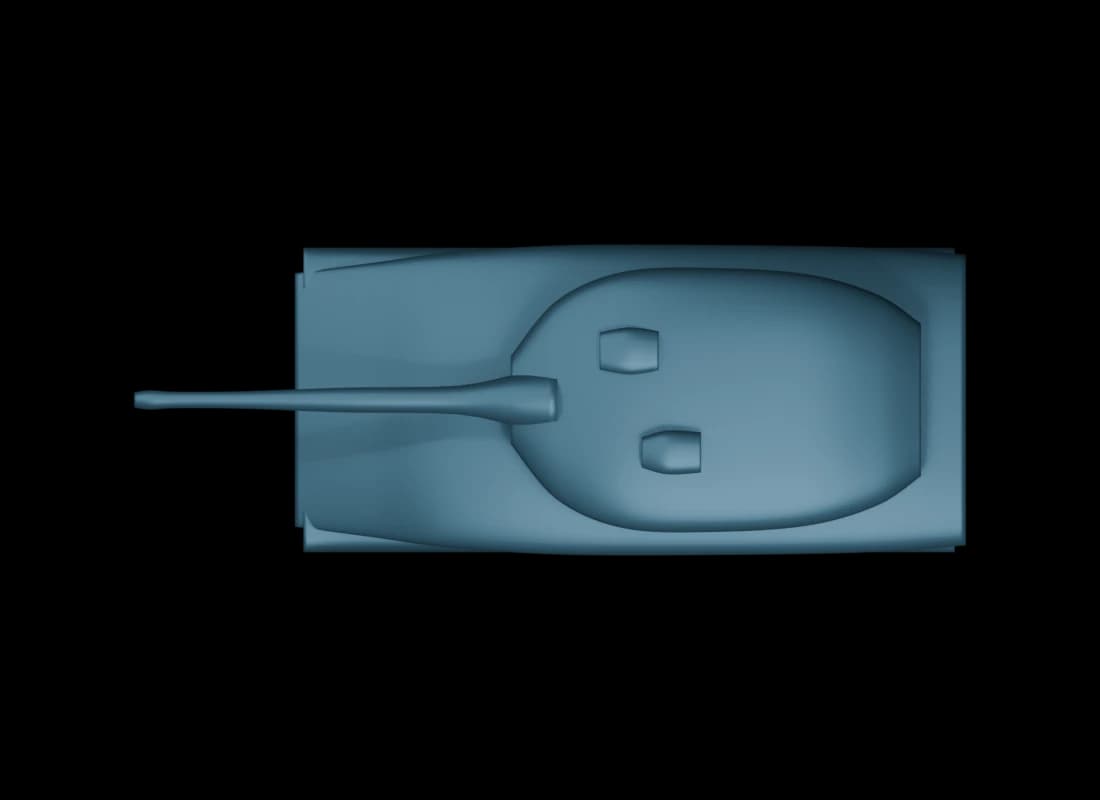
Overview
The M1 family has been in service since 1980; the M1A2 is the second-generation upgrade from 1992, with SEP v3 the current standard. Alongside the Leopard 2 and Challenger 2 it defined the Western third-generation main battle tank: composite armour, a 120 mm smoothbore gun, stabilised fire control, and crew survivability well beyond contemporary Soviet designs.
The most argued-over choice is the gas turbine. The AGT-1500 offers high power density, fast cold starts, and a distinctive acoustic signature (the "Abrams whisper") — but its idle fuel consumption approaches its full-power consumption, an enormous logistical burden in defensive operations and long standby. The Gulf War's desert environment amplified that problem and also its advantage: turbines tolerate dust better than diesels.
Over three decades it has steadily gained weight, from the M1's 54 tonnes to SEP v3's 73-plus. Almost all of that is armour and electronics while engine power stayed the same, so power-to-weight fell from about 27 hp/t to roughly 20. That is the common fate of every long-lived armoured platform, and the core motivation behind its eventual replacement.
Design
Crew survivability is the M1's most influential design decision. Ammunition sits in a turret bustle separated from the fighting compartment by an armoured bulkhead, with blow-off panels above — so a propellant fire vents upward rather than into the crew space. That scheme has saved crews in engagements where the tank was penetrated, in sharp contrast to Soviet designs that lay ammunition flat in the hull floor around an autoloader.
The cost is forgoing an autoloader and keeping a four-man crew. A loader takes volume and adds size and weight, but also provides maintenance manpower and another set of eyes. The trade remains unsettled: Russian autoloaders cut height and weight while putting ammunition in the most dangerous place available.
Armour composition and thickness have never been released. The combination of Chobham composite with a depleted-uranium mesh is known, but equivalent thickness figures are estimates only and change by production lot. This entry leaves them blank rather than citing numbers with no traceable origin.
Timeline
M1 enters service
M1A1 adopts the 120 mm smoothbore
Replacing the 105 mm rifled gun with the German 120 mm smoothbore, giving ammunition commonality with the Leopard 2.
Large-scale combat in the Gulf War
Thermal sights and fire control proved decisive at night and in dust, while the turbine's logistical burden was equally exposed.
M1A2 enters production
Adding the independent commander's thermal viewer and an inter-vehicle information system.
SEP v3 deliveries
Adding active protection, new armour, and an auxiliary power unit. Combat weight passed 73 tonnes.
Variants
- M1Retired
With the 105 mm rifled gun, around 54 tonnes.
- M1A1Reserve
The 120 mm smoothbore and improved armour; the mainstay of the Gulf War.
- M1A2 SEP v3In Service
Active protection, new armour, auxiliary power unit. Over 73 tonnes.